Unraveling the Threads: The Intersection of Occupational Segregation and Pay Equity

In the tapestry of the modern workplace lies an intersection of occupational segregation and pay equity. Persistent disparities often affect certain groups, leaving a more profound impact. While there have been some gains in areas like pay transparency and pay equity, the occupational segregation persists. Many factors contribute to the perpetuation of inequality at work. But this pattern must be broken if organizations want to create a culture of trust and truly flourish.
Occupational Segregation: the equities of work
Occupational segregation is a phenomenon where certain groups are disproportionately concentrated in specific industries, jobs, or roles. It has long been a contributing factor to the gender pay gap. Traditionally, women have found employment in fields like education, healthcare, and social services, professions where compensation tends to be lower compared to male-dominated sectors like finance, technology, and manufacturing. This segregation is rooted in historical norms, societal expectations, and systemic biases that steer individuals toward, or away from, certain professions based on gender, race, or other demographic factors.
Research conducted by The Society for Human Resource Management (SHRM) and McKinsey & Company assessed how well businesses with varying degrees of workplace diversity performed. They discovered that firms with a varied workforce in terms of gender and ethnicity are 15% and 35% more likely to succeed than those with less diversity. Similarly, businesses with greater racial and gender diversity see increased sales, clientele, and profitability.
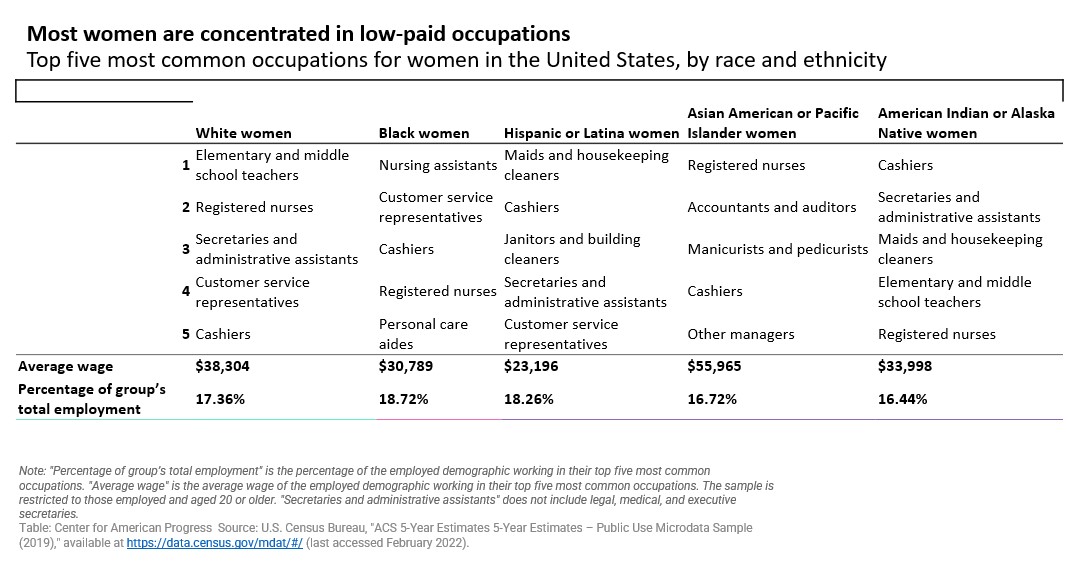
The Pay Gap: Real Consequences in Black and White (and Every Shade In Between)
Occupational segregation has a direct correlation with pay inequity. Women and minority groups are overrepresented in lower-paying occupations and underrepresented in higher-paying ones, The result is a wage gap.
In 2022, American women typically earned 82 cents for every dollar earned by men. That was about the same as in 2002, when they earned 80 cents to the dollar.
This gap is not just an abstract statistic. It translates into real-life consequences, affecting the livelihood and wellbeing of individuals, families, and communities.
The gender pay gap can directly impact a woman’s ability to pay for quality housing, food, healthcare and, perhaps most importantly, childcare. The lack of affordable childcare finds many mothers forced to work fewer hours, and in turn, can impact their ability to advance in their careers. The cycle perpetuates when these mothers do not earn enough to pay for their children’s secondary education.
Fairness is a subjective concept, particularly when one considers the influence of unconscious bias, which occurs when people are not aware of their own preconceptions and preferences.
The biggest victims of the intersection of the intersection of occupational segregation and pay equity are most often women of color. The compounding effects of gender and racial biases create a double whammy, pushing these women further away from high-paying, male-dominated fields. As a result, they face a steeper uphill battle in pursuing equal pay. The wage gap for women of color, when compared to their white male counterparts, is larger than for white women, illustrating the intensified impact of intersecting factors on earnings.
5 Best ways to Eliminate Occupational Segregation and Pay Equity
Building an inclusive and equitable workplace and addressing the challenges of occupational segregation and pay equity can be hard but it is increasingly a business imperative. It requires a diversified approach that combines organizational commitment, policy implementation, and a commitment to transparency.
- Conduct a regular compensation and comprehensive pay equity analysis.
- Promote pay transparency.
- Conduct a holistic reevaluation of recruitment and hiring processes.
- Accommodate diverse needs and gender equality programs in the organization.
- Regularly review and adjust policies and practices inside the organization.
Breaking the Chains: A Call to Action
Breaking down these barriers requires more than a one-time pay equity study and adjustment. A comprehensive approach by employers is needed. This approach includes:
- Putting a stake in the ground and proactively working to eliminate bias in hiring, promotion, and compensation practices.
- Examining job frameworks, career paths, and development opportunities.
- Developing programs that encourage diversity and inclusion, along with targeted mentorship and training programs.
All these initiatives can help dismantle barriers that contribute to occupational segregation.
Policymakers also play a crucial role when they implement legislation that promotes pay transparency, equal opportunity, and fair wages. Advocating for workplace cultures that prioritize equality and inclusion is essential for creating an environment where everyone has an equal chance to succeed, regardless of their gender or race.
Building a Future of Equality
When pay equity and DEI&B (Diversity, Equity, Inclusion, and Belonging) are achieved, employees feel valued for their ideas and skills, and believe their differences are respected. They believe that their pay, along with that of every other employee in the organization, is fair, regardless of gender or ethnicity. A solid DEI&B plan must be implemented to preserve such values, and pay equity is one of its main objectives. Paying employees fairly and accurately is one of the most straightforward and efficient methods to accomplish DEI&B goals. This intersection benefits both businesses and employees as well. The root causes of occupational segregation must be addressed by employers who actively work toward a more inclusive and equitable workforce. A few words come to mind when I think of how we can create a future where everyone is afforded the same opportunities to reach an equitable outcome and compensation for their contributions, regardless of their gender or background: awareness, education, desire, and, most of all, intention. Let us weave a future where equality is the common thread that binds us all.