How to Emphasize Your Investments in Non-Monetary Compensation
- Step 1. Understand the Benefits Provided by Your Competitors.
- Step 2. Get to Know Your Employees.
- Step 3. Create Your Non-monetary Compensation Plan.
- Step 4. Communicate it to Your Employees.
Paying your employees the right salary is a must for you to keep them in your company, but it does not guarantee that it will keep them happy and motivated to perform their duties and responsibilities. Monetary compensation will not ensure that your employees will stay long in your organization. Oftentimes, money is not the only reason why your workers will choose to stay in your company. Apart from their work relationship with their colleagues, non-monetary compensation can be the determining factor for an employee to stay or leave your company.
What is a Non-monetary compensation?
To put it simply, non-monetary compensation is the incentive rewarded to an employee in addition to base pay and bonuses. It comes in a myriad of forms such as work flexibility, additional time off, career growth and development opportunities, and employee recognition. Its goal is to keep the employees motivated to work and continually engaged with the organization.
Employees need to understand that the non-monetary benefits make up part of the overall compensation that they receive from the company and while they are not in the form of cash, they have inherent value that contributes to their work-life balance and wellbeing. To get this message across, organizations should be able to track long-term rewards and integrate bonus requirements for their employees in their payroll system in a quick way. Compensation planning works to keep an automated record system that reduces cycle time and incorporates merit, bonus, and reward data of employees in a tool that can create a reliable compensation statement.
How can you leverage Non-monetary compensation to retain your employees?
Investing in a competitive non-monetary compensation strategy can result in loyal and motivated employees in your organization. While coming up with an equitable salary system is of equal importance, the time value of adding non-monetary incentives means that recognition for a job well done can be immediately felt by the employee because of its real-time application, unlike in cash rewards where we have to wait for the next payday for it to reflect.
What sets your company apart from the others can also stem from having perks that are creative and experiential to make them memorable to your employees. Excellent non-monetary benefits are the ones that leave a lasting and positive impact on an employee. Here are tips to formulate an ideal non-monetary compensation package that is relevant to the growth of your business:
-
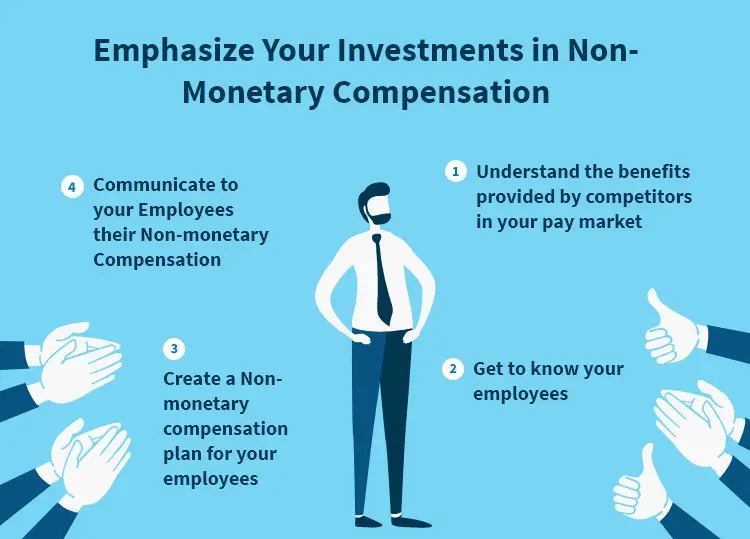
Understanding the benefits provided by competitors in your pay market
Just as money is a universal incentive to reward employees for their function in the organization, employers are now prioritizing non-monetary compensation plans to make their work environment attractive to employees, and this poses a challenge in differentiating your company from the rest in your pay market. Since the goal is to turn your employees into long-term partners of your company, you should know the current competitive non-monetary benefits provided by other organizations in similar pay markets for you to discover better ways to retain your current pool of human resources. It is wise to develop a combination of benefits where it makes sense to the conduct of your business.
-
Get to know your employees
When planning your non-monetary compensation strategy, it is essential to consider what your employees want. This way, you can gauge how they want to be rewarded and what drives their productivity. For example, your people might work better in a work-from-home setup than having to report to the office a few times a week. Others might be stimulated to be surrounded by colleagues in the workplace where they can exchange ideas face to face and learn from each other. In recognizing the exceptional performance of an employee, some people may not be comfortable with public praise. You can tailor your recognition program and rewards to the preferences of your people.
-
Create a Non-monetary compensation plan for your employees
Now that you have done your research on the non-monetary compensation plan of your pay market and got to know your employees, it is time to design your own nonmonetary employee incentive compensation plan. Build a package that can provide the best value for their productivity. Compensation packages usually come with healthcare benefits and retirement packages, especially for full-time positions and this can be ramped up to extend the perks above and beyond. Fringe benefits and experiential incentives such as team dinners and paid business trips can go a long way to securing talent retention.
-
Communicate Effectively to your Employees about their Non-monetary Compensation
Even though you understand the value of providing these non-monetary benefits, there is a risk that your employees may not appreciate it. They may see less value in the non-monetary benefits compared to cash incentives and to avoid this, you have to communicate your rewards programs to your employees and explain why they are in place. You can also get feedback on what works for them to give you an understanding of what is relevant and effective. This way, you can update your program regularly and ensure that it is still cost-effective and can still meet your business’s priorities.
Salary.com’s Total Rewards Statement Software can help your organization streamline a strategic communication plan for rewards roll-out so your employees will be fully aware of all the benefits you provide. It offers an educational approach to understanding the value of all elements of compensation such as salary, insurance, incentives, and benefits so you can foster a motivated and efficient workforce.
What kind of Non-monetary incentives will be more valuable to your employees?
The benefits you choose to reward your employees should encourage them to help the company achieve its goals and this can happen when the employee feels that there is more to earn by staying. An employee will choose to stay in a company where he sees a path for personal and professional growth. To implement this, the company may offer opportunities for an employee to upskill, for instance, sending them to training sessions and industry conferences or covering their tuition for continuing studies related to their line of work. Not only do they see progress in the knowledge of their work but the company’s investment in upskilling will also contribute to the overall business performance. Another effective incentive is providing your employees with additional time off outside of the paid time off and these can be in the likes of birthday leaves and mental health days. This way, the employee will feel more valued knowing that their health and life outside work are considered important to the company, and they can perform better with the rest they get from the added time off work.
Importance of Crafting a Non-monetary Incentive Plan
Non-monetary compensation plays an important role in the retention of employees in an organization. Motivated and satisfied employees equate to a low turnover of employees, increased productivity, and higher engagement with the company. Just because they do not come in the form of cash, it does not mean that they should be valued less as a reward. For the employer and the employee to be on the same page in understanding the essence of having non-monetary compensation, the employer must communicate effectively and regularly to their employees about the compensation program of the company and how these benefits that come with their salary are put in place to support the wellbeing of the employee.
In designing a reasonable and relevant non-monetary compensation package, the benefits you provide must be meaningful to your business. It has to stimulate your employees to direct their efforts to achieve the goals of your organization. With the right combination of incentives, your company will see progress in its operations fueled by the highly motivated talents that it has.