How to Design an Irresistible Employee Bonus Plan That Boosts Motivation

- Step 1. Outline what you want to achieve with the program.
- Step 2. Identify the behaviors or achievements to reward.
- Step 3. Select a range of rewards.
- Step 4. Set up a system for employee recognition.
- Step 5. Review and adjust the program regularly based on feedback.
Whether you're a small business owner or part of a larger HR team, recognizing and rewarding employees can be a rewarding challenge. It requires various skills and knowledge to motivate your team, and a strong employee rewards and recognition program.
We explore what an employee rewards and recognition program is, why it’s important, and how to create an effective one. We also share some unique employee rewards and recognition program examples that can inspire your approach.
What is the employee rewards and recognition program?
An employee rewards and recognition program is a system that acknowledges and celebrates the achievements and contributions of employees within an organization. It involves recognizing and rewarding positive actions, behaviors, or accomplishments.
The main goal of an employee rewards and recognition program is to motivate and retain employees by celebrating their achievements and contributions. These recognition and rewards programs can include monetary rewards, non-monetary incentives, public recognition, and peer to peer recognition.
A study shows that employees want public recognition, and 53% want more acknowledgment from their managers. Additionally, over 70% of employees find praise from managers and colleagues motivating. This shows the importance of a rewards and recognition program and the use of employee recognition software.
Use Compensation Planning Software to manage compensation and program participation. It offers detailed analytics and proactive communication, covering everything from cash compensation to insurance benefits and incentive plans.
What is the best reward for employee recognition?
The best reward for employee recognition depends on the individual and their achievement. While monetary, tangible rewards like bonuses can be effective, non-financial incentives—such as public recognition, extra time off, professional development, or personalized gifts—can also be valuable. The most effective reward is one that is meaningful to the team member and aligns with their goals.
Improve efficiency in calculating employee bonuses with Compensation Planning Software. It offers Excel-like flexibility and SaaS efficiency.
Benefits of implementing an employee rewards and recognition program
Rewarding and recognizing employees for their hard work is a great way to improve your company. Here are the key benefits of an employee rewards and recognition program:
Happier employees: Recognition and rewards boost employees' job satisfaction and happiness at work. Feeling valued leads to a more positive and fulfilling work experience.
More engaged employees: Recognition and rewards increase employee engagement. Engaged employees are more invested, enthusiastic, and likely to put in their best effort, which improves performance.
Higher productivity: Motivated employees are more productive. They work harder, more efficiently, and achieve better results, which can significantly impact the organization’s overall productivity.
Better company culture: A strong rewards and recognition program for employees creates a positive work environment by promoting appreciation, respect, and support, which improves team dynamics and company culture.
Happier customers: Employees who feel valued are more likely to provide excellent customer service. Their positive attitude and motivation improve customer interactions, resulting in higher satisfaction and loyalty.
Easier hiring: Companies with strong recognition programs attract top talent. Job seekers are more likely to choose organizations that value and reward their employees, making hiring easier and more effective.
More creativity: Recognizing and rewarding innovative ideas tends to encourage employees to be creative, motivating them to develop new solutions and support the company’s growth.
17 unique employee rewards and recognition program examples
Here are 17 creative ways to reward and recognize employees that can lift morale, boost productivity, and create a positive workplace:
-
Paid sabbaticals
Give employees extended time off after several years of service to recharge or pursue personal goals. This reward helps retain employees and encourages long-term commitment.
-
Spot awards
Recognize employees instantly for their outstanding work with rewards like cash bonuses, gift cards, or extra time off. This promotes a culture of immediate appreciation.
-
Employee of the month/quarter
Recognize outstanding employees monthly or quarterly with rewards like a certificate, a special parking spot, or a small cash prize. This motivates others to strive for excellence.
-
Team awards
Reward teams for reaching milestones or completing projects successfully. This encourages collaboration and strengthens team spirit.
-
Mentorship programs
Create mentorship programs where experienced employees guide newer ones. Recognize both mentors and mentees to foster a culture of learning and growth.
-
Flexible work arrangements
Give flexible schedules or remote work options as a reward for high performance. This boosts job satisfaction and work-life balance.
-
Flexible vacations policy
Let employees take vacation days as needed, without strict limits. This shows trust and encourages them to take time off when necessary.
-
Gift cards
Give gift cards for popular stores or restaurants to show appreciation. They can be used to reward performance or simply express gratitude for hard work.
-
Bonus programs
Create bonus programs that reward employees for meeting or surpassing targets. This aligns their efforts with company goals.
-
Point systems
Set up a point-based system where employees earn points for achievements or behaviors that match company values. They can exchange points for rewards like gift cards, extra time off, or development opportunities.
-
Birthday recognition
Celebrate employees’ birthdays with personalized gifts, cards, or treats. This shows the company values them as individuals, not just employees.
-
Extra days off
Give extra paid days off for exceptional performance. This is a great incentive for employees who prefer time off over money.
-
Professional development opportunities
Offer employees chances to attend conferences, workshops, or courses. This shows you’re invested in their growth and long-term success.
-
Wellness programs
Provide wellness programs like gym memberships, mental health support, or wellness retreats. Prioritizing employee health can boost productivity and job satisfaction.
-
Recognition walls
Make a physical or digital wall to publicly acknowledge employees’ achievements. This boosts employee morale and encourages others to aim for recognition.
-
Surprise lunches or dinners
Surprise employees with lunches or dinners as a reward for good work. This also helps with team-building and shows appreciation beyond formal programs.
-
Public commendations
Recognize employees publicly in meetings, newsletters, or on social media. This honors them and sets a standard for others to follow.
How to recognize employees without spending money?
Recognizing employees without spending money can be as simple as offering sincere appreciation. A heartfelt thank you, a public acknowledgment of their achievements, or even a small gesture like sharing a personal story about their positive impact can boost morale and create a positive work environment.
Also, some of the rewards and employee recognition programs mentioned above do not require spending money. Consider non-monetary rewards like flexible work arrangements, extra time off, or professional development opportunities. These gestures show employees their contributions are valued and appreciated.
How to create a solid employee rewards and recognition program
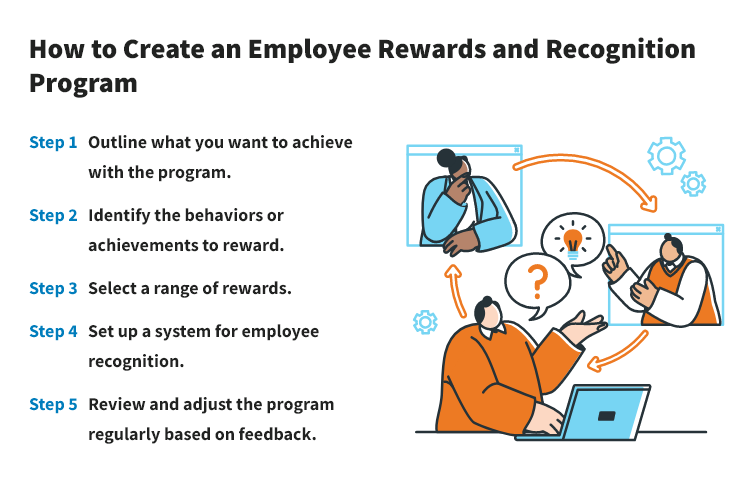
How do you create an employee rewards and recognition program? Follow these 5 steps for success:
-
Step 1: Outline what you want to achieve with the program
Set the goals of your rewards and employee recognition program. This involves identifying what you aim to achieve, such as improving employee engagement, increasing productivity, or promoting a positive work environment.
Start by asking yourself these questions:
What behaviors or achievements do you want to recognize?
How will the recognition program for employees help your company’s goals?
What metrics will measure its success?
-
Step 2: Identify the behaviors or achievements to reward
Clearly define what behaviors and employee achievements will be rewarded, such as meeting performance targets, showing company values, or contributing to team success.
-
Step 3: Select a range of rewards
Offer a mix of rewards to suit different employee preferences, making sure they are meaningful and motivating. Meaningful rewards can include bonuses, gift cards, extra time off, learning and development opportunities, company merchandise, or event tickets.
Speaking of bonuses, improve bonus management with Compensation Planning Software's multi-factor integration and detailed Total Rewards Statements, which show the full value for employees.
-
Step 4: Set up a system for employee recognition
Create a system for recognizing employees by deciding how and when recognition will happen, such as monthly or quarterly. Clearly communicate the criteria for recognition to employees and use tools to make the process smooth and understandable.
-
Step 5: Review and adjust the program regularly based on feedback
Regularly review and adjust the recognition program for employees using feedback and performance data. Ask employees for their opinions, check metrics like engagement and participation, and make changes as needed to keep the program effective and motivating.
Creating a great employee rewards and recognition program for employees should reflect your company’s values and motivate your employees. Ensure it is fair and inclusive, and use employee feedback to make improvements. Compensation Planning Software can support your recognition program for employees by managing merit raises, bonuses, commissions, and equity. It also provides clear rewards statements to keep your employees informed.